


Understanding Complex Part Manufacturing | Rainhouse
What Makes a Part Difficult to Manufacture?
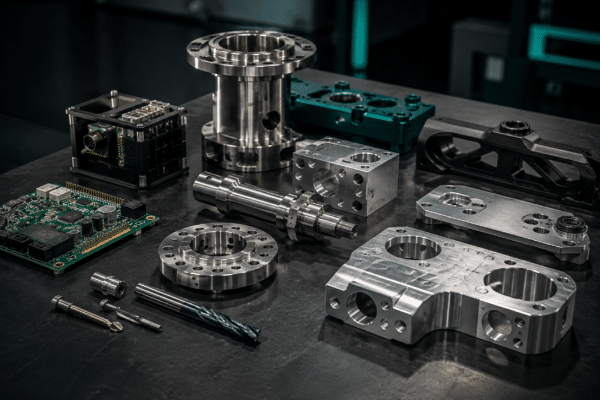
Not all parts are equally straightforward to manufacture. Two components may look similar on a drawing, but geometry, material, tolerances, surface finish, and inspection requirements can require very different manufacturing approaches.
Part complexity can influence everything from programming and tooling to setup time, inspection, cost, and lead time.
At Rainhouse Manufacturing Canada Ltd., understanding these requirements early helps us plan the right manufacturing approach. In this blog, we explore some of the factors that can make a part more challenging to manufacture and why considering them early can lead to better production outcomes.
Complex Geometry
Part geometry is one of the biggest factors affecting manufacturing complexity.
Features such as deep pockets, thin walls, small internal radii, angled surfaces, and hard-to-reach areas may require specialized tooling, additional setups, or multi-axis machining.
The more complex the geometry, the more planning may be required to manufacture the part accurately and efficiently.
Material Selection
Different materials behave differently during manufacturing.
Hardness, strength, heat generation, and material stability can all affect machining strategies, tooling, and production time. Some materials may also require specialized handling or additional process controls.
Selecting a material that meets the application’s performance requirements while considering manufacturability can help improve production efficiency.
Tight Tolerances
Tighter tolerances require greater control throughout the manufacturing process.
They may affect:
- Machine setup
- Tooling selection
- Machining time
- Inspection requirements
- Environmental controls
Applying tight tolerances only where they are functionally required can help reduce unnecessary manufacturing complexity and cost.
Multiple Setups
Some parts cannot be completed in a single machining operation.
Repositioning a component between operations adds time and can introduce additional opportunities for variation. Complex parts may require custom fixturing or multiple setups to access all required features.
Modern multi-axis CNC equipment can help reduce the number of setups required for certain components, improving both efficiency and repeatability.
Surface Finish Requirements
Surface finish can also influence how a part is manufactured.
Some applications require specific finishes for appearance, fit, sealing, friction, or performance. Achieving these requirements may require additional machining operations, specialized tooling, or secondary finishing processes.
Clearly defining surface finish requirements helps manufacturers determine the appropriate production approach.
Inspection Requirements
A part must not only be manufacturable, but it must also be possible to verify that it meets specifications.
Complex geometry, tight tolerances, and difficult-to-access features can make inspection more challenging. Depending on the component, specialized measurement equipment, fixtures, or inspection strategies may be required.
Considering inspection requirements early helps ensure critical features can be measured and verified throughout production.
Why Early Collaboration Matters
Many manufacturing challenges can be identified before production begins.
Reviewing drawings, materials, tolerances, finishes, and inspection requirements early allows manufacturers to identify potential challenges and determine the most efficient production strategy.
Early collaboration can help:
- Reduce unnecessary complexity
- Improve manufacturability
- Identify potential production challenges
- Support more accurate quoting and planning
- Reduce the risk of costly changes later
Our Approach at Rainhouse
At Rainhouse Manufacturing Canada Ltd., we review project requirements carefully before production begins. Our team considers part geometry, materials, tolerances, tooling, equipment, inspection requirements, and other factors when determining the appropriate manufacturing approach.
By identifying potential challenges early, we can plan production more effectively and help customers achieve reliable, repeatable results.
Conclusion
Manufacturing complexity is influenced by much more than the shape of a part. Geometry, materials, tolerances, setups, surface finishes, and inspection requirements all contribute to how a component is produced.
Understanding these factors early can help improve manufacturability, control costs, and support more efficient production.
Ready to discuss your next project? Contact us today to learn how we can support your manufacturing needs.